


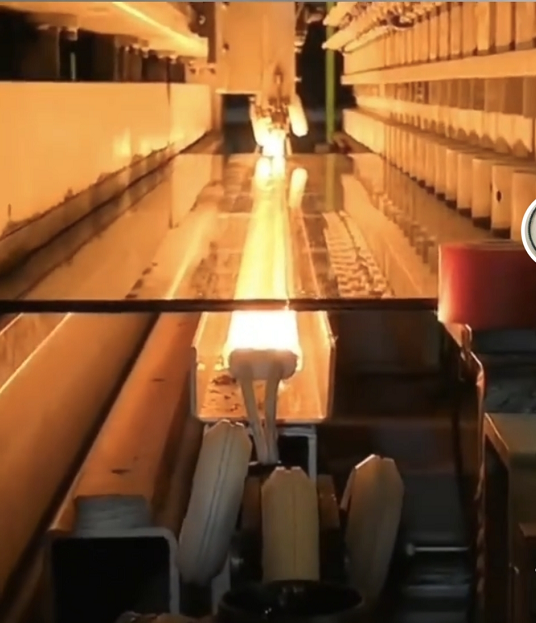
On the IGU line, the sealant has to come up to temperature fast—clean and even, with no hot spots or cold zones. If the heat profile drifts, you start seeing uneven adhesion, weak corner seals, and too many callbacks. And if the heating module takes its time recovering, the whole line just sits there waiting. What matters, technically We build the IGU sealant heating module around short-wave infrared quartz emitters. Response is immediate—full output in seconds—so the sealant hits target temperature quickly, even after a glass size change. The emitters are laid out to give a uniform thermal field across the sealant bead, which lowers thermal stress on the glass edge. Control stays tight: closed-loop temperature feedback holds setpoint within ±2°C, and that matters when you’re running multiple adhesive chemistries. Modules come in standard lengths and voltages, with terminals and shielding spec’d for real factory wiring. Why it works in practice In insulating glass production, timing is everything. Fast heat-up cuts cycle time and boosts throughput without pushing the conveyor beyond the sealant’s working window. Uniform heating improves corner integrity and knocks down rejects from incomplete cure. Energy use drops because the emitters deliver heat on demand—minimal warm-up waste, and no bulky pre-heated air. For retrofits, the module is engineered as a drop-in for common IGU presses, so you can swap out aging heaters without reworking the machine footprint. A few shop-floor details The module performs best when glass emissivity is consistent and bead geometry stays stable. With low-e coatings, surface reflection can cut absorbed energy, so we size power and tune the heating window to match your typical IGU stack. Installation means matching the existing electrical service and confirming clearances so you don’t cook nearby components. Plan on routine emitter inspection—service life depends on stable voltage and clean terminal connections.