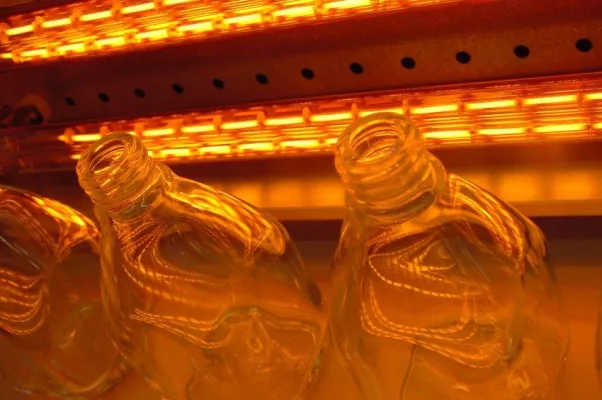
On the tempering line, preheat is where the day’s yield gets decided—before the furnace door even opens. If the glass is underheated, it stays stiff. You end up pushing higher press loads, and breakage climbs. Overheat, and you’re wasting energy while uneven expansion shows up as optical distortion. The preheat lamp has to nail a narrow thermal window quickly, then hold it steady, cycle after cycle. We build the tempering preheat lamp around short-wave quartz infrared emitters, tuned to match glass’s absorption band. That means the heat goes straight into the sheet, not into warming the air around it. Response is immediate—full output in seconds—so you can keep pace with high-speed indexing without waiting on a heavy radiant panel to recover. Output density is calibrated for uniform heat across the width, without edge hot spots, and the lamp body is compact enough to fit tight preheat zones. The electrical design stays practical: standard voltages, industrial terminations, and a quartz envelope that handles rapid thermal shocks without drama. On the line, this lamp shortens the preheat segment and flattens the temperature profile, so the glass hits the furnace with a consistent thermal history. The payoff shows up as fewer stress fractures, tighter bow control, and repeatable optical quality. Energy use drops because you’re heating the glass directly, not the whole chamber. Plants running 3–6 mm float have reported single-digit percentage cuts in preheat energy and meaningful gains in first-pass yield. Maintenance gets easier too—fewer lamp changes, less downtime, and an output decay curve you can plan around in service windows. **Installation is plug-and-play only when the mounting geometry and reflector alignment match your line.**Check clearances to the glass path and confirm drive timing so it syncs with indexing. If dwell doesn’t line up, you’ll get localized overheat. The lamp is sensitive to contamination—keep the quartz clean and keep dust and vapors under control. With coated products, expect slightly higher emissivity; adjust power or dwell to maintain uniformity.