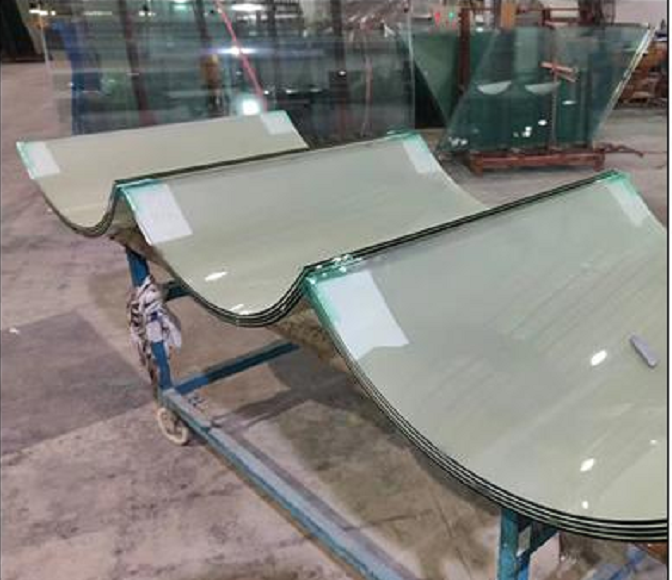
On the bending line, the furnace door opens and you’re instantly in a race against the clock. Uneven heat across the glass? You’ll pay for it with optical distortion, thermal stress cracks, and scrap that drags your yield down. Traditional convection heating just can’t keep up with the complex curves and tight tolerances demanded by modern architectural and automotive profiles. Temperature swings aren’t an option. What we lean on, technically We run near-infrared (NIR) quartz emitters to get uniform heating for bending. The system hits the glass right at its emissivity, building a controlled thermal field without relying on air movement. The payoff is a consistent temperature profile across the whole sheet, with response times measured in seconds. That means faster ramp-up, tighter soak control, and energy use that follows the process, not the furnace volume. Why it fits the bending cell In bending, speed and repeatability are what hit the bottom line. Infrared cuts cycle time by shaving preheat and cooldown, and the even thermal field stops the usual headaches—edges that run hot, centers that run cool—both common drivers of optical defects. You get more bends per hour, fewer rejects from stress fractures, and lower gas or electricity consumption. For complex shapes, the directed radiation gives you localized control, so you can match the tool profile without cooking adjacent areas. What you need to keep in mind Infrared is line-of-sight, so fixture design isn’t an afterthought. Shadowing from supports can create temperature gradients, and highly reflective coatings can shift absorption behavior. We map out emitter placement with you and tune power density to your exact glass thickness and coating stack. The module works with most bending furnaces and can be dropped in as an upgrade, but we still run a quick thermal profile validation to lock in the process windows.